
Vinaigrette ingredients
A homemade salad dressing starts with oil and an acidic ingredient, then takes shape through seasoning and optional flavorings. Each ingredient has a distinct job: oil softens the sharpness of vinegar or citrus, while seasonings add contrast and aroma. The exact balance depends on the ingredients you choose, since a mild vinegar and a tart lemon juice do not taste equally sharp. Use a flexible starting point and let the flavors of your oil, acid, and additions guide the proportions.
Oil and acid
Oil gives vinaigrette body, carries aromatic flavors, and rounds the acidity. Vinegar or citrus supplies brightness; its variety affects the dressing’s sharpness and aroma. The classic starting vinaigrette ratio is about three parts oil to one part acid, measured by volume. For a small batch, that means 3 tablespoons oil and 1 tablespoon vinegar or lemon juice.
| Ingredient | Role and flavor | Texture | Starting quantity |
|---|---|---|---|
| Extra-virgin olive oil | Fruit-forward, sometimes peppery | Full-bodied | 3 tablespoons |
| Neutral oil | Mild, with little flavor of its own | Light and smooth | 3 tablespoons |
| Wine or cider vinegar | Tangy; flavor varies by type | Thin and bright | 1 tablespoon |
| Lemon juice | Fresh, citrusy, and tart | Thin and clean-tasting | 1 tablespoon |
Treat the proportions as a starting point, not a fixed rule. A 2:1 oil-to-acid balance tastes sharper, while 4:1 is gentler; adjust according to the acid’s strength and the oil’s flavor. Robust olive oil can stand up to assertive red wine vinegar, whereas mild oil suits delicate citrus. The best oil for vinaigrette is one whose flavor you enjoy in a small taste, and the best vinegar is one that complements rather than overwhelms it. Lemon juice works when you want citrus brightness instead of vinegar’s fermented tang.
Seasonings and optional additions
Seasonings make the oil and acid taste more complete, while optional additions bring extra aroma, sweetness, or body. Start with small amounts, then adjust to taste so no single flavor masks the others.
- Salt: A small pinch sharpens the other flavors and reduces the impression of dullness; add a little at a time, especially if other ingredients are salty.
- Black pepper: Freshly ground pepper adds warm, woody bite; a few turns are enough for a small batch without making the dressing hot.
- Dijon mustard: A small spoonful adds savory tang and a mild pungency, while its fine texture gives the dressing a little more body.
- Herbs: Chopped parsley, chives, or thyme contribute fresh or earthy notes; use a modest pinch of dried herbs because their flavor is concentrated.
- Garlic: A little finely grated or minced garlic brings pungent depth; begin with a small piece, since its flavor can quickly dominate.
- Sweeteners and aromatics: A little honey or sugar softens sharp edges, while minced shallot adds a gentle onion aroma; add either sparingly and taste.
These additions are flexible rather than essential: salt and pepper season the base, while mustard, herbs, garlic, sweetener, and shallot set its character. Small increments make it easier to keep each addition in balance with the chosen oil and acid.
Prepare the ingredients
Before combining vinaigrette ingredients, choose a vessel that suits the amount and the tools available. A bowl gives room to work with a whisk, while a lidded jar makes shaking and storage straightforward. Ingredient temperature and texture can change how readily the dressing comes together, so check them before you start. Add seasonings in small stages to keep adjustments manageable.
Choose a mixing method
Match the vessel to the batch size and the way you prefer to work. A bowl and whisk offer visible control; a jar is compact and can be shaken without transferring the dressing.
| Setup | Ease of combining | Shaking and portion size | Cleanup |
|---|---|---|---|
| 500–750 ml bowl with a small whisk | Easy to watch and adjust; the whisk reaches across a broad surface. | Best for about 2–4 servings; not designed for shaking. | Requires washing both bowl and whisk. |
| 120–250 ml screw-top jar | Quick to load, though thick ingredients may cling to the sides. | Easy to shake; suits a small batch of roughly 1–3 servings. | One container to wash, with a narrow opening to rinse. |
| 250–500 ml measuring cup with a fork or mini whisk | A spout makes pouring controlled; the narrow base suits smaller quantities. | Convenient for about 1–2 servings; shaking is not practical. | Usually simple to rinse, with the utensil washed separately. |
For a larger batch, a bowl leaves enough room for the whisk to move without splashing. For a single meal, a small jar saves counter space and lets you shake the dressing directly in its serving container.
Temperature and texture matter in either vessel. Oil at ordinary room temperature, around 20°C, usually pours readily; chilled oil may look cloudy or move more slowly. Thick mustard, honey, or minced garlic can cling to a spoon or jar wall, so scrape them in fully before combining. A wider bowl also makes it easier to work with ingredients that are too thick to shake evenly.
Season in stages
Gradual seasoning gives you more control than adding all the salt, pepper, or herbs at once. Start with a small pinch or a few grinds, then taste and add another little amount only if needed; seasoning is easy to increase but difficult to remove.
Taste during preparation after the initial seasonings are incorporated, then taste again when the dressing is ready to serve. Try a little on a leaf or other intended ingredient as well as by itself: greens, grains, and vegetables can change how intense the seasoning seems. Account for planned additions before making a final adjustment. Olives, capers, and salty cheese, for example, contribute salt, while a sweet ingredient can alter the overall impression. Add dried herbs sparingly at first, since their flavor can become more pronounced as they sit; fresh herbs can be assessed near serving time. This staged approach keeps the seasoning suited to the food the dressing will accompany.
Mix the vinaigrette
A reliable vinaigrette mixing method starts with the water-based ingredients and finishes with the oil. Mixing in that order gives salt, pepper, and other seasonings a chance to disperse before the oil coats the mixture. Whisking and shaking both create a temporarily uniform dressing, though they use different tools. The finished texture should look glossy and evenly blended, not permanently set.
Combine the acid and seasonings
Measure the vinegar or citrus juice into a bowl, using a bowl wide enough to leave room for whisking. For a single-serving batch, a small bowl about 12–15 cm across is easy to handle; for a larger batch, choose one with extra space around the whisk.
Add the salt, pepper, and any other seasonings called for, then stir or whisk until they are dispersed through the liquid. Salt dissolves more readily in vinegar or lemon juice than in oil, so this step helps avoid concentrated salty or peppery spots in the finished oil and vinegar dressing.
Scrape the bowl’s sides once if dry granules cling above the liquid, then stir again until the acid looks evenly seasoned. If using finely chopped herbs or minced garlic, distribute them through the acid now as well; the oil added next can otherwise make their placement less even.
Add oil and mix
Choose a whisk and bowl for a controlled pour, or a tightly sealed jar for a quick shake. Add the oil to the seasoned acid, then mix until the dressing looks briefly uniform.
- Set a small bowl on a stable counter and hold a whisk ready, or select a clean jar with a lid that seals securely to contain the liquid.
- Measure the oil before mixing so it is ready to pour; keeping it close to the bowl makes it easier to add steadily while whisking.
- For the whisking method, start whisking the seasoned acid and pour in the oil in a thin, steady stream rather than adding it all at once.
- Keep the whisk moving as the oil enters, sweeping across the bottom and sides so fresh oil meets the acidic liquid throughout the bowl.
- Once all the oil is added, whisk briskly for about 20–30 seconds, until the dressing appears glossy, slightly thickened, and evenly cloudy.
- For the jar method, pour the oil into the seasoned acid, leave a little headspace, and tighten the lid before turning the jar upright.
- Shake the closed jar vigorously for 10–15 seconds, until no distinct layer of oil remains and the mixture looks evenly blended.
The smooth appearance is temporary: oil and water-based ingredients naturally separate again as the dressing stands. Whisk or shake just before serving to bring the mixture back together.
Balance the flavor
A vinaigrette can taste balanced on its own yet seem too sharp or heavy once it reaches a salad or cooked vegetables. Judge its flavor in the context of the food it will dress, since leafy greens, grains, and roasted vegetables each affect how the dressing comes across. Make one small adjustment at a time rather than changing several flavors together. A fresh taste after each adjustment makes it easier to identify what improved the balance.
Too sharp or acidic
If the first taste is sharply acidic, add oil in a small increment rather than trying to mask the tang with another flavor. For about 1/4 cup of dressing, begin with 1 teaspoon of oil, then stir or whisk briefly and taste again. That amount is easy to assess and unlikely to make a large batch suddenly greasy.
Continue with another teaspoon only if the acidity still dominates. Each addition dilutes the acid’s impact and gives the dressing a rounder, smoother impression; a strongly flavored oil can also change the overall taste, so choose one that suits the food. Avoid pouring freely, because excess oil can leave the dressing heavy before the sharpness has softened enough.
Test a small amount on the actual food, not just from a spoon. A crisp leaf may make an acidic dressing feel more pronounced, while a bite of roasted vegetables can taste less sharp alongside it. If the dressing seems balanced on the food, stop adjusting, even if a plain spoonful tastes more intense. Recheck after a few bites, since the combination is the useful measure.
Too rich or flat
When a vinaigrette feels oily or rich rather than sharp, a little acid can restore lift. Add about 1/2 teaspoon of vinegar or lemon juice to 1/4 cup of dressing, mix it through, and taste before adding more. Small increments preserve the existing balance; a larger pour can make the mixture abruptly sour and require another round of adjustment.
Try the dressing on the food it is meant to accompany. A bite of greens or cooked grains can reveal whether the extra acidity cuts through the richness without overwhelming the dish. If the dressing still coats the mouth heavily, add another small measure of acid and taste again with a fresh bite. Stop when the food tastes brighter, not merely more sour.
If the flavor seems dull rather than rich, build seasoning gradually. Add a small pinch of salt to a 1/4-cup portion, mix, and taste; if needed, repeat with a little more salt or freshly ground pepper. These additions can clarify the existing flavors without changing the dressing’s overall character as much as extra acid or oil would.
Finish by tasting the seasoned dressing with the intended food, because salt and pepper can register differently on plain dressing than on a full bite. Add only what remains missing: salt for muted flavor, pepper for a gentle savory edge, or a small amount of acid if richness still lingers.
Fix common vinaigrette problems
A basic vinaigrette can change as it sits: oil and vinegar often separate, and seasonings may settle or distribute unevenly. These changes are usually easy to correct just before serving. Check the dressing in its bowl or jar, then use the remedy that fits the problem. A quick remix and a measured taste are more reliable than adding several ingredients at once.
Separation
Separation is normal in a basic vinaigrette because oil and vinegar do not stay combined on their own. After a few minutes in a bowl, or after storage in a jar, you may see a clear layer of oil above the more acidic liquid. The dressing has not necessarily gone bad; it has simply separated.
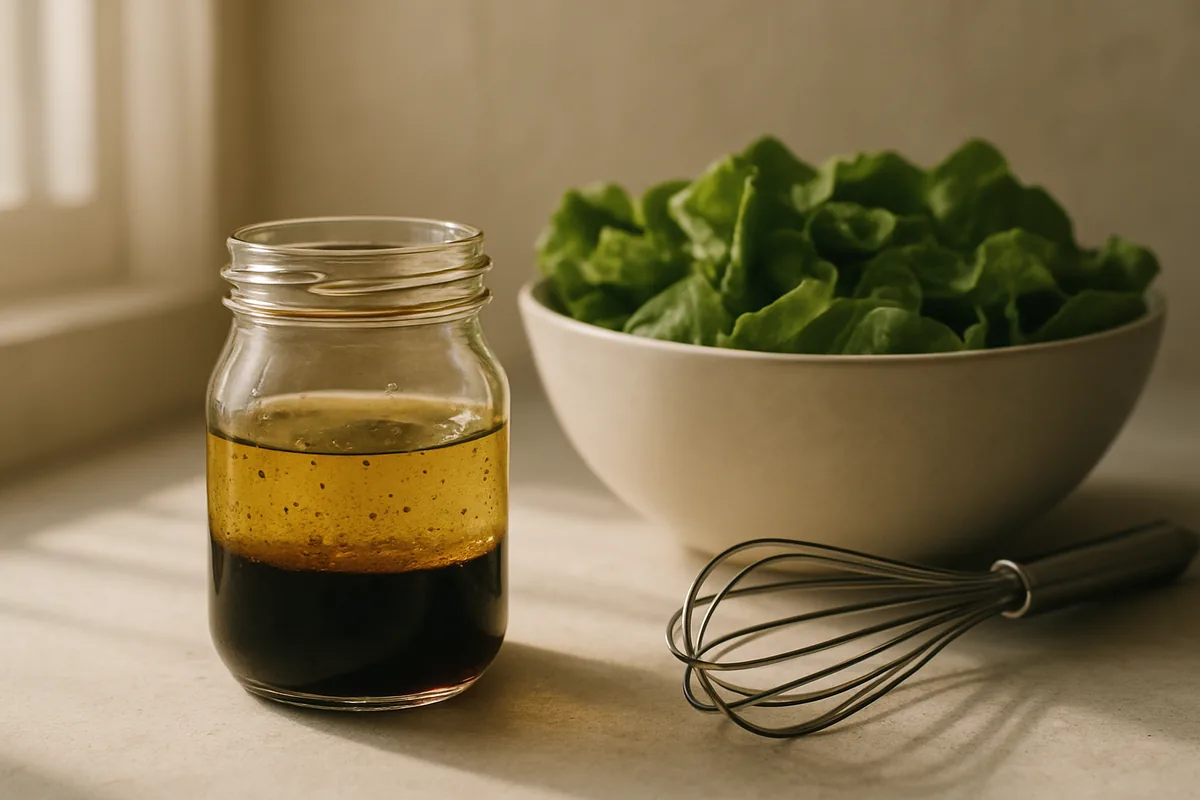
To recombine it, whisk briskly for about 10 to 15 seconds, scraping the bottom and sides of the bowl. For a jar, close the lid securely and shake for 5 to 10 seconds, until the liquid looks evenly cloudy. If the layers return while you are setting the table, repeat the whisking or shaking just before pouring. A basic vinaigrette may separate again, so remixing at serving time is more practical than expecting a permanent emulsion.
Uneven seasoning
If one bite tastes saltier or more acidic than another, the ingredients may not be evenly distributed. Give the dressing a thorough whisk, including the liquid at the bottom of the bowl; in a jar, shake it firmly for several seconds. Taste a small spoonful after remixing, rather than judging it from a spot where seasoning may have settled.
Make only one small adjustment at a time: add a pinch of salt, a few drops of vinegar, or a small amount of another ingredient already in the dressing, then mix and taste again. For instance, add salt in pinches of roughly 1/16 teaspoon, not a full teaspoon, so each change remains easy to assess. If the flavor still varies from spoonful to spoonful, remix before adding anything else. Once it tastes consistent, toss the salad or drizzle the dressing immediately, since seasonings can settle again as it stands.