
What salad dressing does
Salad dressing is a preparation added to salad to give it flavor and texture. Its consistency affects how it spreads across leaves and settles on denser ingredients. Its intensity also changes how strongly each bite tastes of the dressing compared with the produce. These effects help you decide what role a dressing should play in a particular bowl.
Coating and flavor
A salad dressing is a prepared liquid or spoonable mixture that you add to a salad to alter its flavor and texture. It coats ingredients rather than changing their structure: a thin dressing runs over broad lettuce leaves and into gaps between chopped vegetables, while a thicker one tends to cling in visible patches. A small amount of a pourable dressing can cover many delicate leaves, but a dense coating may weigh them down and make their surfaces feel slick. On firmer pieces, such as cucumber or bell pepper, a thicker layer is less likely to disappear into folds or creases.
Intensity determines how noticeable that coating is in each mouthful. A gentle flavor leaves the taste of the leaf or vegetable prominent; a pronounced flavor can become the first thing you notice, even when the salad contains several components. The same dressing may seem more assertive when spread thinly over tender lettuce than when it meets a substantial bite of cabbage. Consider both the amount that will cling and the strength of its flavor: a light film gives a subtle finish, while a heavier coating creates a more distinct dressing-led taste.
How it relates to the salad
Dressing interacts with each salad component through both contact and contrast. Tender spinach leaves have a soft surface that a fluid coating can reach easily, while tightly layered cabbage leaves and crisp pieces of carrot offer more resistance and a firmer bite. Grains such as barley or quinoa add weight and absorb some moisture at their surfaces, so the dressing may taste less prominent across a forkful containing grains than across a leaf alone. Ingredients with contrasting textures make the dressing part of the overall mouthfeel, not just an added flavor.
Light ingredients, including lettuce, cucumber, and thinly sliced radish, are easily overwhelmed by a dense coating or a very pronounced taste. Substantial elements such as cooked grains, roasted vegetables, or chunks of potato can hold their own beside a more noticeable dressing. There is no single choice that works for every salad: the best dressings for leafy greens may differ from what suits a bowl built around grains or roasted vegetables. For a practical pairing, match the dressing’s weight to the ingredients’ texture and keep its flavor intensity proportionate to the most delicate component.
Main dressing ingredients
A dressing’s character starts with its fat and acidic ingredients, then develops through salt and optional flavorings. Each ingredient contributes a different kind of richness, sharpness, texture, or aroma. Small changes in the kinds or amounts of these components can make the finished mixture feel lighter, fuller, sharper, or more rounded. Knowing what each one contributes makes ingredient choices more deliberate.
Fat and acidic ingredients
Oils provide the main source of richness and help a dressing spread across ingredients. Neutral oils such as canola contribute a mild, smooth body, while extra-virgin olive oil brings a more pronounced fruity or peppery flavor. Sesame oil and walnut oil have distinctive aromas, so even a small amount can shape the overall taste. Fats such as tahini or mashed avocado add more substance and can make a mixture feel thicker than one made with liquid oil alone.
Vinegar and citrus juice supply acidity and sharpness. Red wine vinegar has a more assertive flavor than mild rice vinegar, while lemon juice offers a fresh citrus note. Lime juice is also acidic but has its own aromatic character. These ingredients contribute water as well as acid, so increasing their share can make a dressing taste sharper and feel less rich; increasing the fat share generally produces a fuller, smoother texture.
A familiar oil-to-acid proportion is about three parts oil to one part vinegar or citrus juice, though the ingredients themselves affect the result. A strongly flavored vinegar can seem prominent even at a smaller share, and a fragrant oil can dominate a mixture with less of it. Emulsifying oil and vinegar disperses the fat into small droplets, creating a more uniform texture temporarily; the proportions still determine how rich or sharp the dressing tastes. Choose oils and acids for their individual flavors as well as their texture.
Seasonings and additions
Seasonings add contrast and aroma to the foundation of oil and acid. Salt is especially influential because its amount and grain size affect both flavor and how evenly it dissolves.
- Fine salt dissolves quickly in vinegar or citrus juice; coarse kosher crystals take longer, and undissolved grains can create uneven salty spots in a cold dressing.
- Honey adds floral sweetness and body, while granulated sugar tastes cleaner; either can soften a sharp impression without supplying the richness of oil.
- Chopped parsley and chives contribute fresh, green aromas, while dried oregano is more concentrated; dried herbs need time in liquid to release their flavor.
- Black pepper adds a warm, woody bite, and smoked paprika brings gentle smokiness and color; ground spices disperse more evenly than whole seeds.
- Dijon mustard contributes tang and a slight paste-like thickness, and its fine particles help keep oil droplets dispersed longer when the mixture is shaken.
- Minced garlic gives a pungent, savory note, while finely chopped shallot tastes milder; smaller pieces distribute more evenly through a thin dressing.
- Anchovy paste adds concentrated saltiness and savory depth, whereas grated Parmesan brings a salty, nutty flavor and makes the mixture more substantial.
Choose additions that have a clear purpose: mustard can contribute both tang and body, while herbs mainly add aroma. For a simple homemade salad dressing, start with a small amount of a strong seasoning, then add more only if needed.
Common dressing styles
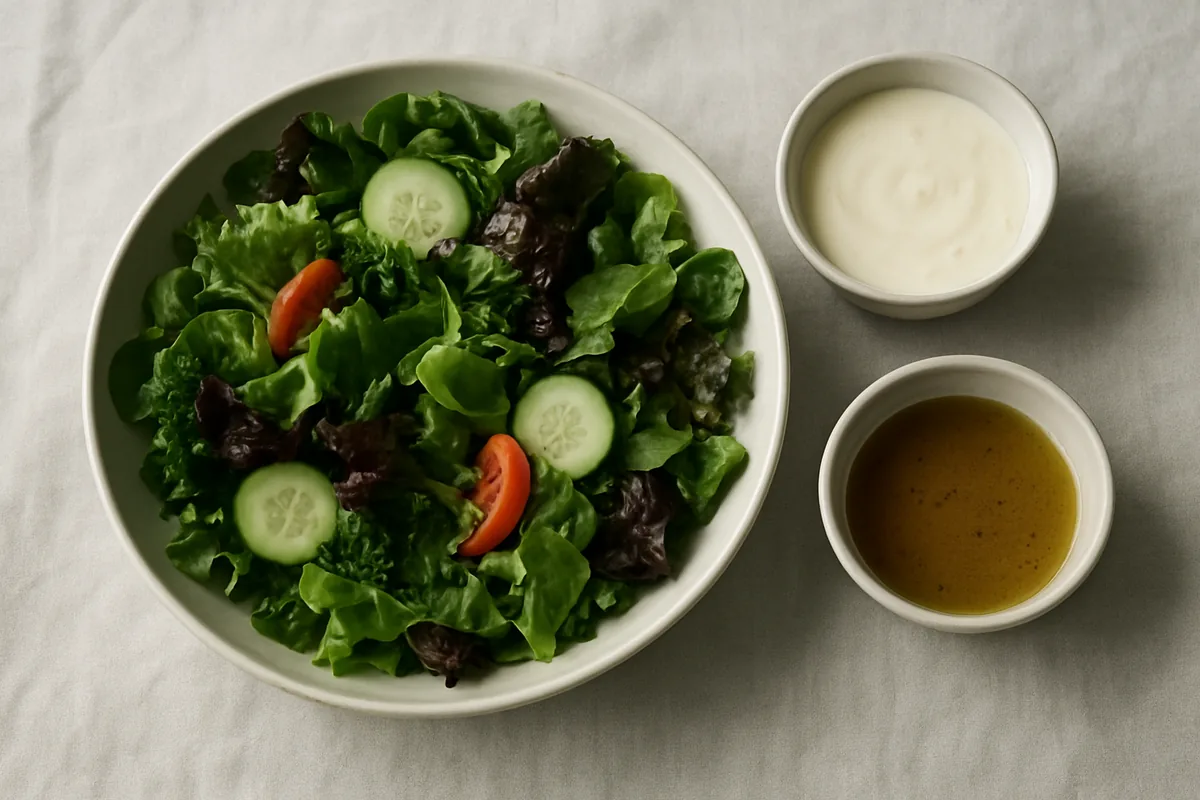
Salad dressing types differ in their texture, base, and the ingredients they suit. Vinaigrettes are usually fluid and tangy, while creamy styles cling more heavily to foods. Herb, sesame, sweet-tart, and spicy profiles add further variety without fitting neatly into a single texture category. Knowing these broad differences makes it easier to choose a dressing that complements a salad’s ingredients.
Vinaigrettes
A vinaigrette is commonly built from oil and an acidic ingredient such as vinegar or citrus juice. Its texture is usually fluid, so it can spread through delicate leaves without weighing them down. Mustard, honey, minced shallot, or chopped herbs may be added for flavor, and mustard can also help the mixture stay blended temporarily.
Oil and vinegar naturally separate when left to stand. Shaking or whisking disperses the droplets, but an ordinary vinaigrette generally separates again over time; this does not mean it has failed. A stable emulsion has smaller droplets held together by an emulsifier, while a quick shake makes a looser mixture that is convenient for serving.
Vinaigrettes work across more than leafy salads. A light citrus version can suit tender greens, while a sharper vinegar-based dressing can stand up to cabbage, lentils, or other substantial ingredients. Their relatively thin consistency also lets them reach between grains and chopped vegetables, rather than forming a thick layer on the surface. For warm vegetables, a vinaigrette can be added while they are still slightly warm so the flavors spread over the pieces.
The style ranges from bright and simple to aromatic, depending on the acid, oil, and seasonings used. Classic vinaigrette recipes may include mustard or herbs, but the defining feature is the loose oil-and-acid structure, not one fixed ingredient list. Choose a thinner version when the salad has delicate leaves, and a more assertive one when its ingredients have stronger flavors or firmer textures.
Creamy dressings
Creamy salad dressings have a thicker body than vinaigrettes and tend to coat ingredients more visibly. Mayonnaise provides a smooth, dense base; yogurt gives a lighter, tangier texture, while sour cream contributes a rich, soft consistency. Some styles rely on blended ingredients, such as avocado or softened nuts, to create body without using a conventional dairy or mayonnaise base.
The base affects how a dressing feels and behaves. Mayonnaise-based ranch and Caesar dressings are typically smooth and substantial, so a small amount can cling to crisp lettuce, chopped vegetables, or pieces of bread in a composed salad. Yogurt-based versions are often looser and more tart, making them suitable for leafy salads, slaws, and dips. Blended bases can range from pourable to spoon-thick depending on their ingredients and how much liquid is incorporated.
Compared with a vinaigrette, a creamy dressing leaves a more continuous coating and can soften the contrast between crisp, bitter, or sharp ingredients. That fuller texture makes it a familiar choice for chopped salads, raw vegetable platters, and cabbage salads, where the dressing needs to stay on pieces rather than run to the bottom of the bowl. It also works with hearty salads containing potatoes or beans, whose firm surfaces can support a richer coating.
Examples include ranch, Caesar, blue cheese, and yogurt-herb styles, though recipes vary in thickness and seasoning. Creamy does not necessarily mean dairy-based: blended avocado, tahini, or other plant ingredients can produce a similarly cohesive texture. Select a thinner creamy dressing for tender leaves and a thicker one for sturdy vegetables or ingredients served as a dip.
Other flavor profiles
Some dressings are easiest to recognize by their dominant flavor rather than by whether they are thin or creamy. Herbs, fruit, sesame, and chile can each shape a dressing, while the base and texture vary from one recipe to another. The table gives familiar examples, not a universal classification: regional recipes often combine flavors and techniques in ways that do not fit a single category.
| Profile | Typical ingredients | Texture | Broad uses |
|---|---|---|---|
| Herb-forward | Parsley, dill, chives, or basil with oil, vinegar, or yogurt | Fluid when oil-based; thicker when yogurt-based | Leafy salads, chopped vegetables, or grain salads |
| Sweet-tart | Fruit juice, honey or another sweetener, and vinegar | Usually pourable, with a glossy finish | Salads with fruit, bitter leaves, or roasted vegetables |
| Sesame-based | Sesame oil, toasted sesame seeds, or tahini with an acidic ingredient | Light when oil-based; creamy when tahini is used | Noodle salads, slaws, and vegetable salads |
| Spicy | Fresh chile, chile paste, or hot sauce in an oil, citrus, or creamy base | Ranges from thin to spoonable | Bean salads, sturdy greens, or chopped vegetables |
These profiles can overlap: an herb dressing may also be sweet-tart, and sesame can appear in either a thin or creamy preparation. For a practical choice, match texture to the salad’s structure and use the dominant flavor to complement, rather than obscure, its main ingredients.
Balancing dressing flavor
A well-balanced dressing lets its sharp, rich, salty, sweet, and aromatic notes remain distinct without one overwhelming the others. Small changes can shift that balance: a little more acidity may make a heavy-tasting dressing seem brighter, while fat can soften an aggressive edge. Sweetness and aromatics also change how sharpness and richness are perceived. Taste after each adjustment, ideally with a salad leaf, because a dressing can seem more intense on its own.
Adjusting sharpness and richness
Acidic ingredients such as vinegar or citrus bring a crisp, sharp sensation and can make flavors seem more defined. If a dressing tastes flat or overly heavy, a small addition of acid may lift it; if it makes the mouth pucker or leaves a harsh, lingering tang, the sharpness is dominating. Add a little at a time, mix thoroughly, then taste again rather than trying to correct the whole flavor in one step.
Fat contributes a fuller, smoother sensation that can round off acidity. When a dressing feels thin or pointed, a little more oil or another rich component may soften the attack and give the flavor a longer finish. If it feels greasy or dulls the other flavors, richness has gone too far. The aim is not to eliminate the acidic note, but to let it remain noticeable without making the dressing seem biting.
Sweet elements can make acidity seem less severe, though they do not remove it. Use a small addition when the sharpness is close to right but still feels too forceful; stop if the dressing begins to taste candy-like or loses its fresh edge. Aromatics such as garlic, black pepper, mustard, or fresh herbs add different kinds of intensity: pepper can bring warmth, garlic a lingering pungency, and herbs a fresher impression. Since these notes can build as the dressing sits, retaste after mixing and give it a few minutes before adding more. Adjust one quality at a time, then stop when the first taste is bright, the middle feels rounded, and no single note lingers unpleasantly.
Seasoning to taste
Salt helps bring the other flavors into focus; a dressing that tastes muted may need seasoning even when its acidity and richness feel balanced. Add a small pinch, stir until it dissolves, and taste again. If the dressing now seems more vivid without tasting distinctly salty, the seasoning is supporting the other notes. A briny, harsh finish or a flavor that reads mostly as salt signals that you have gone too far.
Judge seasoning with a bite of the salad ingredient rather than relying only on a spoonful of dressing. A plain romaine leaf gives a mild, crisp test: taste it with a little dressing and notice whether its flavor remains clear or disappears beneath the seasoning. If it still tastes muted, make a small adjustment and repeat the bite. Changing one element at a time makes the result easier to assess; the best balance is the one that tastes lively on the leaf without leaving a salty aftertaste.
Making and choosing a dressing
A well-mixed dressing distributes its ingredients evenly, while a well-matched one complements the salad without overwhelming it. Consider the tenderness, moisture, and richness of the ingredients before choosing a texture or level of intensity. At home, a jar or small bowl is enough to combine and assess a batch. The vinaigrette method and dressing-selection guide provide step-by-step detail for those two decisions.
Mixing at home
A homemade salad dressing can be mixed in a jar, bowl, or small blender; choose a tool that suits the batch size and texture you want. Work in stages so the mixture is easy to assess and adjust.
- Measure the salad dressing ingredients into a clean jar or bowl, keeping quantities consistent so you can judge the texture and seasoning accurately.
- Close the jar and shake firmly for about 10 to 15 seconds, or whisk in a bowl until the components look evenly dispersed.
- For a smoother result, use a small blender for roughly 15 to 30 seconds; stop when the mixture looks uniform rather than continuing to aerate it.
- Taste a small amount on a leaf, not just from a spoon, because the greens can change how pronounced the dressing seems.
- Adjust one feature at a time, such as adding a little more acidity or seasoning, then mix again before assessing the change.
- Expect some mixtures to separate after standing; shake or whisk them briefly before serving to redistribute the components.
The vinaigrette method gives a step-by-step explanation of combining and dispersing a dressing. For everyday batches, a jar makes mixing and remixing straightforward.
Matching dressing to ingredients
Match a dressing’s weight and intensity to the salad rather than treating every bowl alike. Leaf tenderness, moisture, richness, and flavor all affect how much coating and contrast will work.
- Dress delicate butter lettuce with a light coating; a thick, strongly flavored mixture can weigh down its soft leaves and obscure their mild taste.
- Sturdy kale can carry a more substantial texture and assertive flavor, especially when the leaves are paired with firm, earthy vegetables.
- For a salad with avocado and hard-boiled egg, choose enough acidity to cut through the richness without masking the ingredients’ mild flavors.
- Watery cucumber and ripe tomato release moisture as they sit, so a concentrated dressing is less likely to become diluted in the bowl.
- Sweet roasted vegetables can suit a tangier dressing, while naturally sharp ingredients such as radishes need a less forceful contrast.
- When a salad includes crisp raw vegetables and tender leaves, use a texture that coats both without collecting heavily between the leaves.
- For a bowl with several bold components, keep the dressing’s flavor moderate; one dominant ingredient should not make every bite taste alike.
The dressing-selection guide explains how to make these choices step by step. As a practical rule, pair delicate leaves with a lighter coating and robust ingredients with more body.